SCI-FI: Mythologies Transformed at Science Gallery Melbourne offered fresh insights on science fiction, a genre built on envisioning alternative futures and imaginary realms. The lines connecting science fiction with ancient philosophy and mythologies were brought to light through the work of Asian and First Nations women artists and collectives.
Featuring contemporary artworks, film excerpts, and historical artefacts, the exhibition adopted Western science fiction paradigms, such as parallel worlds and inter-dimensional travel, as a starting point to explore the genre’s possible roots in Asian philosophy and spirituality. Following the success of their first collaboration, MENTAL, Science Gallery and the University of Melbourne were proud to collaborate again with the ArtScience Museum on the presentation of this exhibition.
Dr Ryan Jefferies, Director of Science Gallery at the University of Melbourne, said it was an honour to collaborate with Singapore’s ArtScience Museum on the second iteration of this exhibition.
“Originally launched last year to great acclaim, the exhibition uncovered new perspectives on science fiction by highlighting connections between the genre and Asian philosophy and mythology. We were excited to present a series of works by predominantly women artists from across the Asia Pacific whose practices were inspired by the region’s history and culture, presented in Melbourne alongside works by First Nations artists whose practices also drew on rich cultural traditions,” he said.
Honor Harger, Vice President of ArtScience Museum at Marina Bay Sands, said the exhibition celebrated the emergence of new voices and perspectives in the science fiction genre.
“Over the years, the traditionally male-dominated and Western-centred genre of science fiction evolved to give rise to more diverse voices, and the exhibition celebrated this by showcasing how women artists from Asia were addressing science fiction, dream worlds, and fantastical realities in their work.
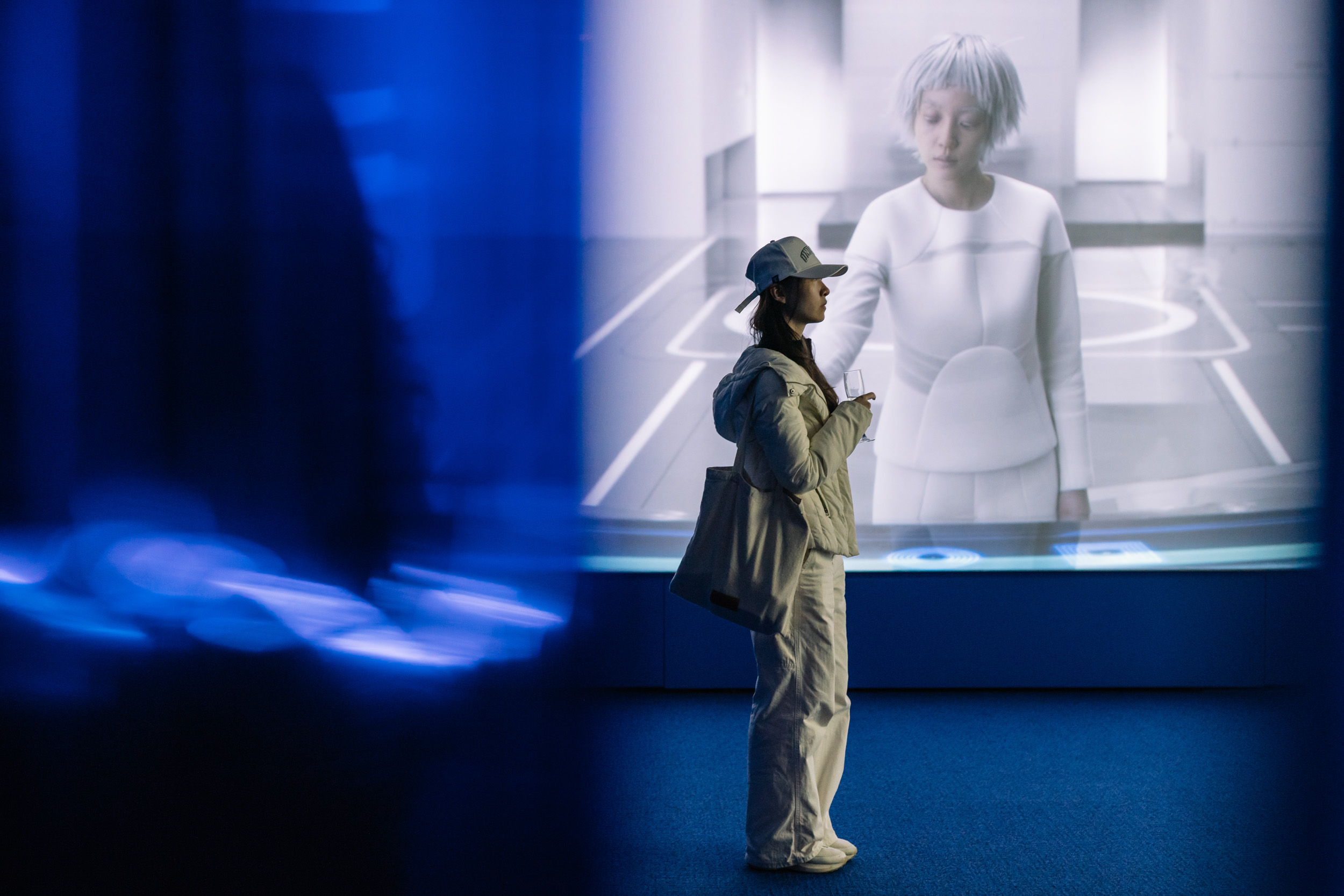
“Using science fiction as a starting point to explore these diverse worlds and inclusive futures envisaged by some of the most prominent artists working today, the exhibition highlighted concepts such as parallel universes, interdimensional travel, and transcendence—notions deeply rooted in Asian philosophy—to suggest that some science fiction tropes could have their origins in Asia,” she said.
Professor Michael Wesley, Deputy Vice-Chancellor Global Culture and Engagement at the University of Melbourne, expressed:
“This powerful collaboration with Singapore’s ArtScience Museum exemplified our commitment to fostering international partnerships that transcend disciplinary boundaries, deepen our cultural understanding, and enrich the University’s diverse community. Through such partnerships, we continued to offer our students, staff, and alumni shared cultural expressions that led to profound and enriching educational experiences.”
SCI-FI: Mythologies Transformed included internationally acclaimed multidisciplinary artist Mariko Mori’s seminal video work, Miko No Inori, which presented the artist as a priestess, shaman, or otherworldly figure performing a ritual beckoning the viewer to travel between worlds, and Mountain (Shangri-La) by American-born Chinese artist Patty Chang, a dazzling, mirrored, three-dimensional artwork that could be rotated slowly like a prayer wheel to reflect light and emit ‘energy’ into the surrounding space. Also included was an installation by award-winning Japanese artist, designer, and educator Sputniko! and Napp Studios, Red Silk of Fate – The Shrine & Tamaki’s Crush.
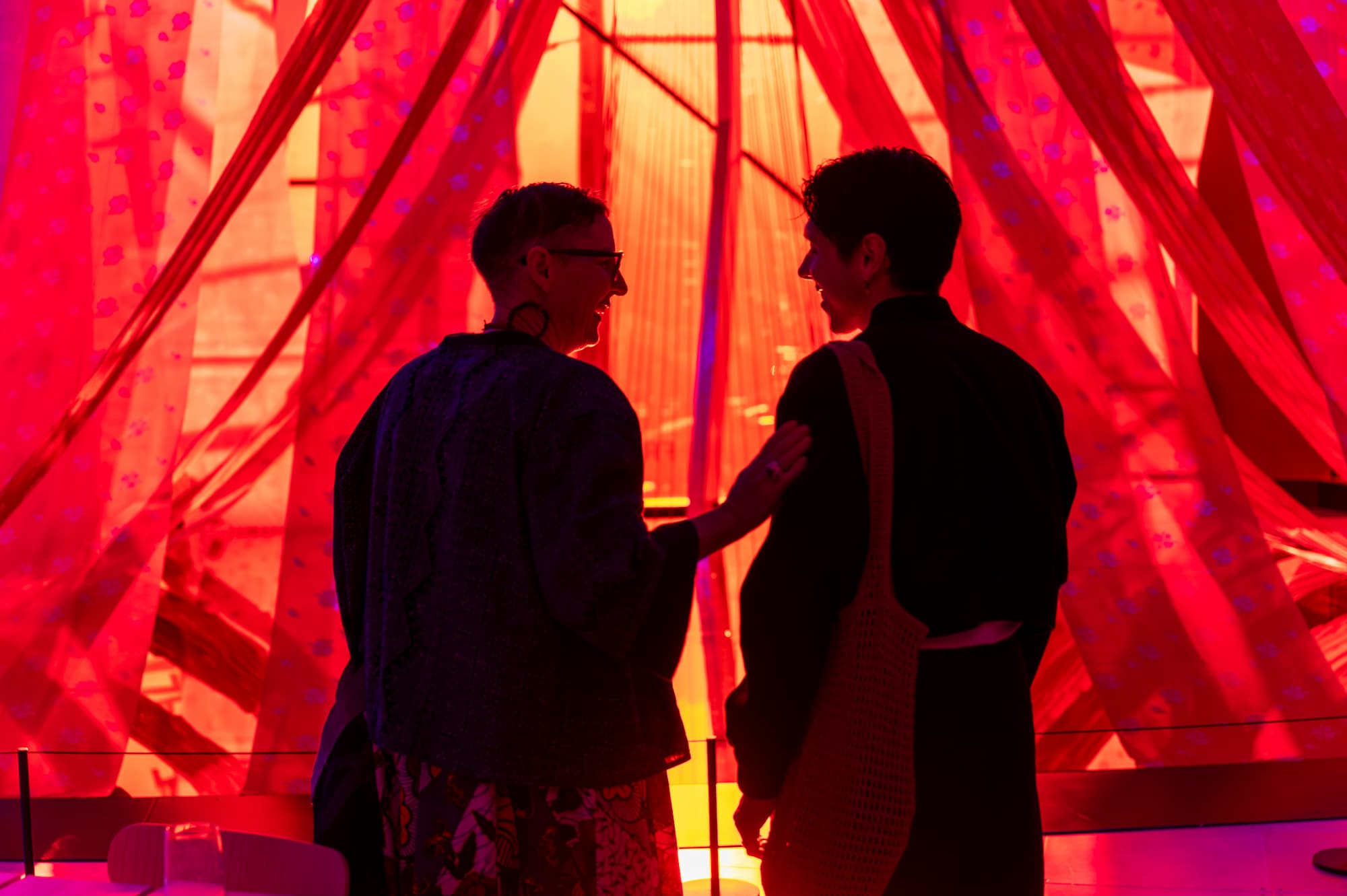
SCI-FI: Mythologies Transformed was curated by Gail Chin, Joel Chin, Adrian George, and Honor Harger from ArtScience Museum together with Science Gallery Melbourne’s Bern Hall and Tilly Boleyn, and was a co-production developed in collaboration between ArtScience Museum Singapore and Science Gallery Melbourne. The original version, New Eden: Science Fiction Mythologies Transformed, was developed and first exhibited at ArtScience Museum, Singapore, from October 2023 to March 2024.